%20(1)%20(1).png)
Siding Replacement vs Painting for Your Home
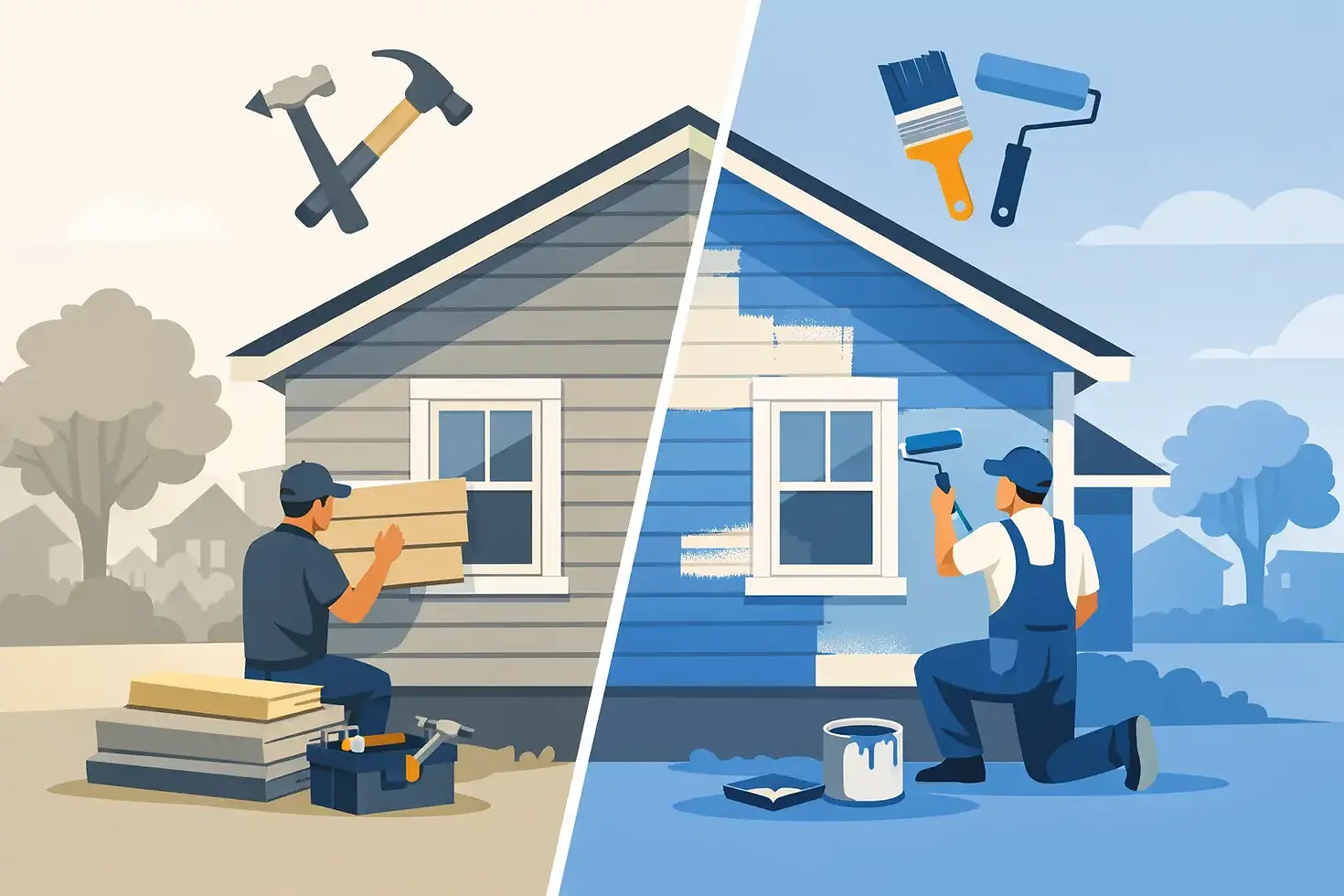
A faded exterior can make an otherwise well-kept property look tired fast, especially after a few North Texas summers. But peeling paint, cracked boards, soft trim, and warped siding are not all the same problem. When homeowners weigh siding replacement vs painting, the right answer depends on what is happening below the surface, not just how the exterior looks from the street.
Painting is often a smart, cost-effective way to protect and refresh sound siding. Replacement becomes the better investment when moisture, rot, impact damage, or widespread failure has compromised the material. A careful on-site assessment can keep you from spending money on a paint job that will not last - or replacing siding that only needs proper repair and preparation.
Start With the Condition of the Siding
The first question is simple: Is the siding still structurally sound? Paint is a protective finish, not a repair for damaged material. It can cover discoloration and seal a properly prepared surface, but it cannot restore boards that are rotted, loose, severely cracked, or pulling away from the wall.
Walk around the property and look closely at the lower portions of exterior walls, areas around windows and doors, chimney connections, rooflines, and shaded sides of the building. These are common places for moisture damage to show up first. Press gently on suspicious wood trim or siding. If it feels soft, flakes apart, or gives under pressure, it likely needs to be replaced before painting.
A few damaged boards do not automatically mean the entire exterior needs new siding. Localized replacement, fascia repair, caulking, and painting may be the practical solution. On the other hand, repeated failures across multiple walls usually point to a larger siding issue that paint alone will not solve.
When Painting Is the Right Choice
Painting makes sense when the siding is intact and the problems are mainly cosmetic or finish-related. Wood siding, fiber cement, engineered wood, and many other paintable materials can look dramatically better with thorough prep and a quality exterior coating.
A professional paint project typically begins with cleaning, scraping loose paint, sanding rough edges, sealing gaps, spot-priming exposed areas, and repairing minor defects. That preparation matters as much as the paint itself. Applying a new coat over chalky, peeling, or dirty siding can lead to early failure, even when the color looks good on day one.
Painting may be the right route if you are dealing with fading from sun exposure, minor peeling, hairline surface cracks, scuffs, an outdated color, or small areas of damaged trim that can be repaired. It is also a strong option for property owners preparing a home for sale, updating a rental, or improving curb appeal without taking on a full exterior renovation.
For North Texas properties, color selection deserves practical attention. Very dark exterior colors can absorb more heat, particularly on sun-facing walls. That does not mean they are off limits, but the siding type, existing condition, and paint system should be considered before making a major color change.
When Siding Replacement Is Worth It
Replacement is usually the better choice when siding has reached the point where repairs would be widespread, temporary, or difficult to blend. Water intrusion is the biggest concern. Once moisture gets behind failing boards or trim, the damage can spread to sheathing, framing, insulation, and interior surfaces.
Watch for boards that are soft or crumbling, deep cracks, holes, buckling, large gaps at seams, repeated paint failure in the same spots, or siding that has separated from the structure. Pest damage and hail damage can also change the scope of the job. If the material is failing in several locations, replacing affected sections may cost less over time than repeatedly patching and repainting.
Replacement also gives you the chance to correct details that affect how long the exterior lasts. Proper flashing, trim installation, caulking, and transitions around windows, doors, and rooflines help manage water. Those details are easy to overlook when the focus is only on color, but they play a major role in protecting the property.
Vinyl siding is one important exception to the usual painting conversation. While vinyl can sometimes be painted under the right conditions, it cannot be repaired the same way as wood or fiber cement. Brittle, cracked, or badly warped vinyl generally needs replacement. Painting may improve its appearance, but it will not fix physical damage or panels that have lost their shape.
Siding Replacement vs Painting: Compare the Real Costs
It is natural to compare the upfront price first. Painting generally costs less than full siding replacement, particularly when the existing surface is in good shape. It can deliver a major visual improvement with less disruption and a shorter project timeline.
But the lowest initial price is not always the lowest cost over the life of the home. Painting damaged siding can create a cycle of recurring repairs, premature peeling, and continued moisture problems. In that situation, the more affordable-looking option may become expensive because the underlying issue remains.
Replacement has a higher initial cost because it involves removing material, repairing affected areas, installing new components, and finishing the work properly. Still, it may protect the building better and reduce maintenance concerns when the old siding is beyond repair.
The best comparison is not paint versus replacement in the abstract. It is paint and minor repairs versus targeted replacement and painting versus full replacement. Many homes fall in the middle. Replacing failed boards, fascia, or trim and then painting the complete exterior can provide a clean, consistent result without replacing every piece of siding.
Do Not Ignore Fascia, Trim, and Caulking
Exterior problems rarely stop at the siding. Fascia boards, soffits, window trim, corner boards, and caulk joints all work together to protect the structure. If one piece fails, water can find a path behind the finish.
For example, a home may have siding that is mostly sound but fascia that has begun to rot near clogged gutters. Replacing that fascia, addressing the water source, preparing the adjacent surfaces, and repainting can be far more sensible than replacing all the siding. The same is true for damaged trim around windows or doors.
Caulking also has limits. It is useful for sealing appropriate joints and small gaps, but it should not be used as a substitute for missing, broken, or severely deteriorated siding. Overfilled caulk lines can trap moisture, look uneven, and fail under normal expansion and contraction.
A Better Way to Make the Decision
Photos can show that paint is peeling, but they often cannot reveal whether the siding beneath it is still solid. An in-person evaluation gives you a clearer answer. A qualified contractor should look for the source of damage, identify which areas can be repaired, and explain where replacement is necessary.
Ask direct questions during the estimate: Are the damaged areas isolated or widespread? Is there evidence of active moisture? Can replacement sections be matched to the existing exterior? What preparation is included before painting? Will the work address fascia, trim, and light carpentry if those items are contributing to the problem?
A dependable proposal should separate repair work from painting work so you understand what is being done and why. That makes it easier to compare options without guessing whether a low quote leaves out needed prep or replacement.
Plan for the Weather and the Property's Use
North Texas weather can be hard on exterior finishes. Heat, strong sun, wind-driven rain, hail, and temperature swings all affect siding and paint. Scheduling should account for surface moisture, forecast conditions, and the time needed for materials to cure properly.
Homeowners may prioritize long-term appearance and protection. Realtors often need a practical curb-appeal improvement before listing. Property managers may need durable repairs that minimize repeat maintenance calls. The right scope can differ, but the core rule stays the same: repair failed materials first, then apply the finish system designed to protect them.
Balderas Painting Service can assess exterior paint, siding, fascia, trim, and light carpentry needs together, helping property owners avoid the hassle of coordinating separate repair and finishing crews. A free on-site estimate provides the best starting point when the condition of the exterior is unclear.
A fresh exterior should do more than look better from the curb. When the siding is sound, painting can protect it and give the whole property a clean new finish. When the material has failed, replacing the damaged sections first gives that finish a solid surface to hold onto for years.


Comments